.svg)
Software Development for Startups Guide: Costs, Tech Stack, and MVP

- Custom vs off‑the‑shelf: early‑stage firms build defensible products by investing in custom software when workflows, integrations or regulatory needs outgrow generic tools. Off‑the‑shelf and low‑code can validate ideas quickly, but rarely scale or differentiate.
- Process matters: a clear roadmap, from kickoff, research and prioritisation to prototyping, architecture, launch and iteration, keeps founders focused and reduces waste. Most MVPs take 4-10 weeks when the scope is tight and the team is aligned.
- Choose the right partner: evaluate agencies on product thinking, communication, documentation, IP handover and post‑launch flexibility. Boutique studios like Rattlesnake combine design, engineering and marketing, with founders deeply involved in each project.
Startup founders often wrestle with one question: how do we turn a new idea into a working digital product without wasting precious time and capital? “Software development for startups” refers to the practice of designing, building and maintaining bespoke web or mobile applications for young companies. Unlike enterprise IT projects that prioritise stability and scale, startup software is about speed, experimentation and learning. Good software lets you validate assumptions, delight early adopters and attract investment. Poorly planned software, on the other hand, can sink your runway.
This guide demystifies the process. It explains when to build custom software, what to prioritise in an MVP, how to choose a tech stack and what drives costs. It also outlines how to select a partner like Rattlesnake Group, a London‑based boutique studio that blends branding, product design and development, and whose founders stay hands‑on from discovery to delivery. Use this as a roadmap to avoid common pitfalls and make informed decisions.
What Software Development for Startups Actually Means?
Before choosing tools or partners, it helps to be clear about what software development really looks like in a startup environment.
Startups vs Enterprise Delivery
Startups operate under high uncertainty and limited resources. They need to ship quickly, learn from users and pivot if necessary. Large enterprises, by contrast, usually have established customers, mature processes and longer planning cycles. This difference translates into how software is built:
- Iteration speed: start‑ups release smaller increments to test hypotheses. Enterprises prioritise stability and must often coordinate across departments.
- Scope flexibility: young companies change priorities as they learn. Big organisations lock scope earlier and follow rigid roadmaps.
- Resource constraints: early teams must do more with less, which makes decisions about tech stack, hiring and outsourcing critical.
Custom Software vs Off‑the‑Shelf
Custom software is designed and built from scratch to address a company’s specific needs. Off‑the‑shelf (or no‑code/low‑code) tools are ready‑made solutions that serve generic workflows. In a startup context:
- Custom solutions offer personalisation, flexibility and scalability. According to SENLA’s overview, bespoke software is built to match unique business processes and can be adjusted as priorities change. Ownership of the code means you control security, integrations and future roadmap.
- Off‑the‑shelf tools are appropriate when you need a quick, inexpensive validation tool or when the problem is common (e.g., basic CRM or accounting). However, they lack flexibility and often tie you to subscription plans.
A balanced approach uses no‑code for rapid prototyping and early proofs-of-concept, then invests in custom software once the business model has traction or when existing tools cannot meet compliance, integration or user‑experience requirements.
A Clear Definition
For our purposes, software development for startups means building a digital product (web app, mobile app, or platform) that helps a new venture deliver value to its customers. It involves product strategy, user experience design, technical architecture, coding, testing and continuous improvement. Crucially, it requires close collaboration between founders, designers, engineers and marketers, not just “hiring developers to write code.”
When Startups Need Custom Software and When They Do Not?
Not every startup needs to build from scratch, but knowing when custom software is worth the investment can save a lot of time and money.
Use Cases for Custom Software
- Defensible IP and differentiation. If your business model hinges on a unique workflow, algorithm or user experience, custom software secures your competitive edge. For example, a healthcare provider building a compliant records system cannot rely on generic tools; bespoke development ensures integration with existing systems and regulatory adherence.
- Complex integrations. When you need to connect multiple services (payment gateways, analytics, CRM, data warehouses), off‑the‑shelf platforms often fall short. Custom code lets you orchestrate these components seamlessly.
- Scalability. Market research shows that custom software scales with your business because features can be extended without platform limitations. High‑growth SaaS firms often outgrow template‑based solutions quickly.
- Security and compliance. Industries like fintech, medtech and legal tech require strict control over data flows. Custom solutions allow you to implement the necessary security measures and obtain certifications.
When Off‑the‑Shelf or Low‑Code Works
- Validation and short lifespan. For early experiments or internal tools, ready‑made software or low‑code platforms can get you to market in days. Off‑the‑shelf tools are ideal for validating demand or testing a simple workflow when the cost of custom development isn’t justified.
- Commodity features. If your problem is a well‑solved commodity (e.g., email marketing, simple team collaboration), there’s little advantage in reinventing the wheel.
- Budget and timeline constraints. Founders with minimal funding may start with low‑code to demonstrate value before raising capital.
A good partner will help you decide whether to invest in custom development or leverage existing platforms. Beware agencies that only pitch custom work or, conversely, push low‑code without discussing long‑term limitations.
MVP, Prototype and v1: What to Build First?
Founders often use these terms interchangeably, but each stage serves a very different purpose and leads to different decisions.
Prototype: Form without Function
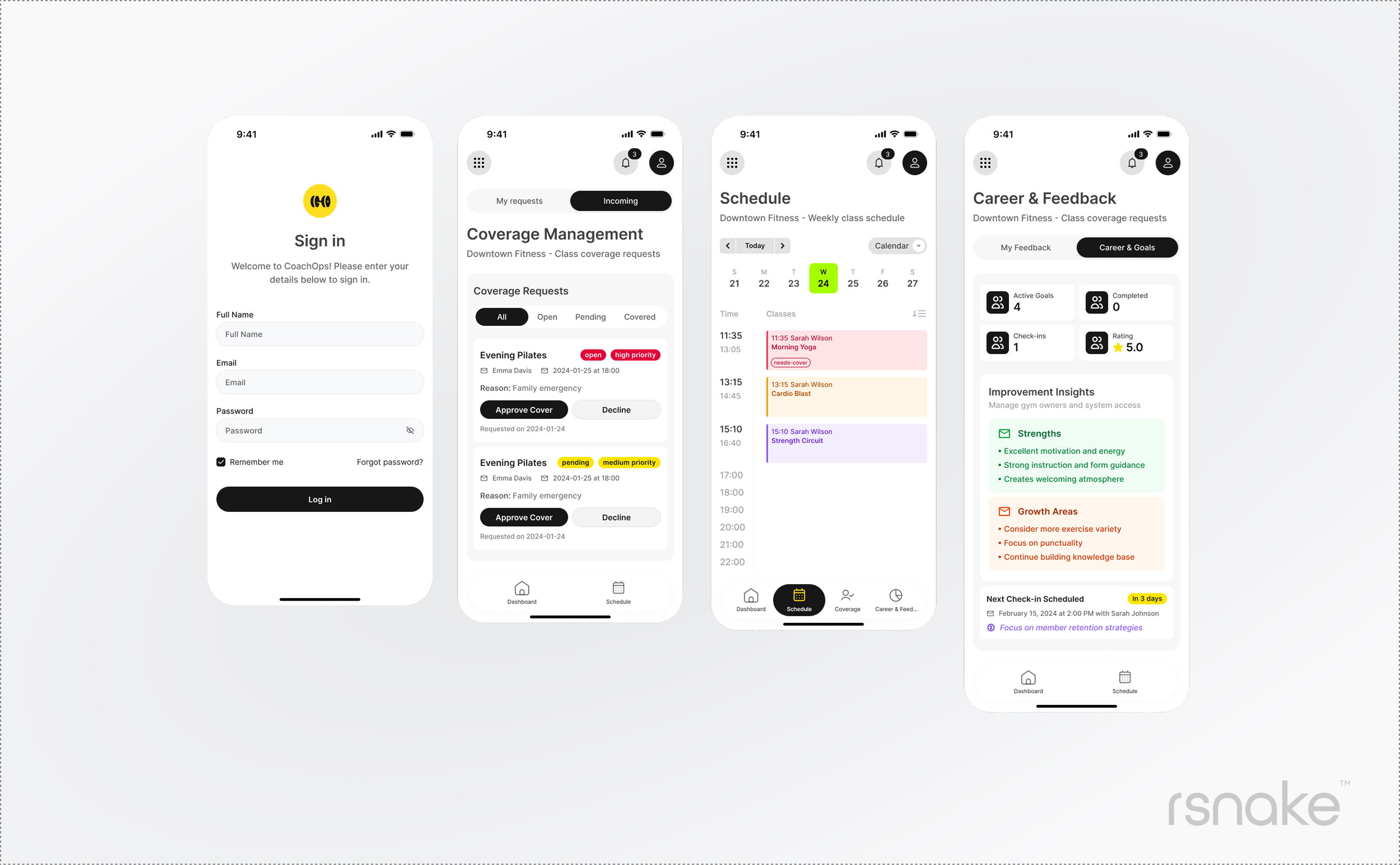
A prototype is a preliminary model of your product that focuses on form and user interaction. Product School describes it as something tangible that lets you communicate your idea to design and engineering teams. Prototypes can range from simple sketches to clickable mock‑ups created in tools like Figma or Sketch. They help clarify user flows and gather design feedback early, but they don’t usually contain working code.
Minimum Viable Product (MVP)
An MVP is the bare‑bones version of your product that still solves a core problem for your customers. It enables you to collect the maximum amount of validated learning with minimal effort. An MVP should deliver real value, even if the feature set is limited. It moves beyond static design into a usable product that users can interact with and pay for.
In practice, an MVP is not a prototype with one extra feature; it’s a functional product designed to test critical assumptions. MVPs are central to modern product discovery and help reduce waste by validating the core value proposition before investing in full development.
.jpg)
Version 1 (v1)
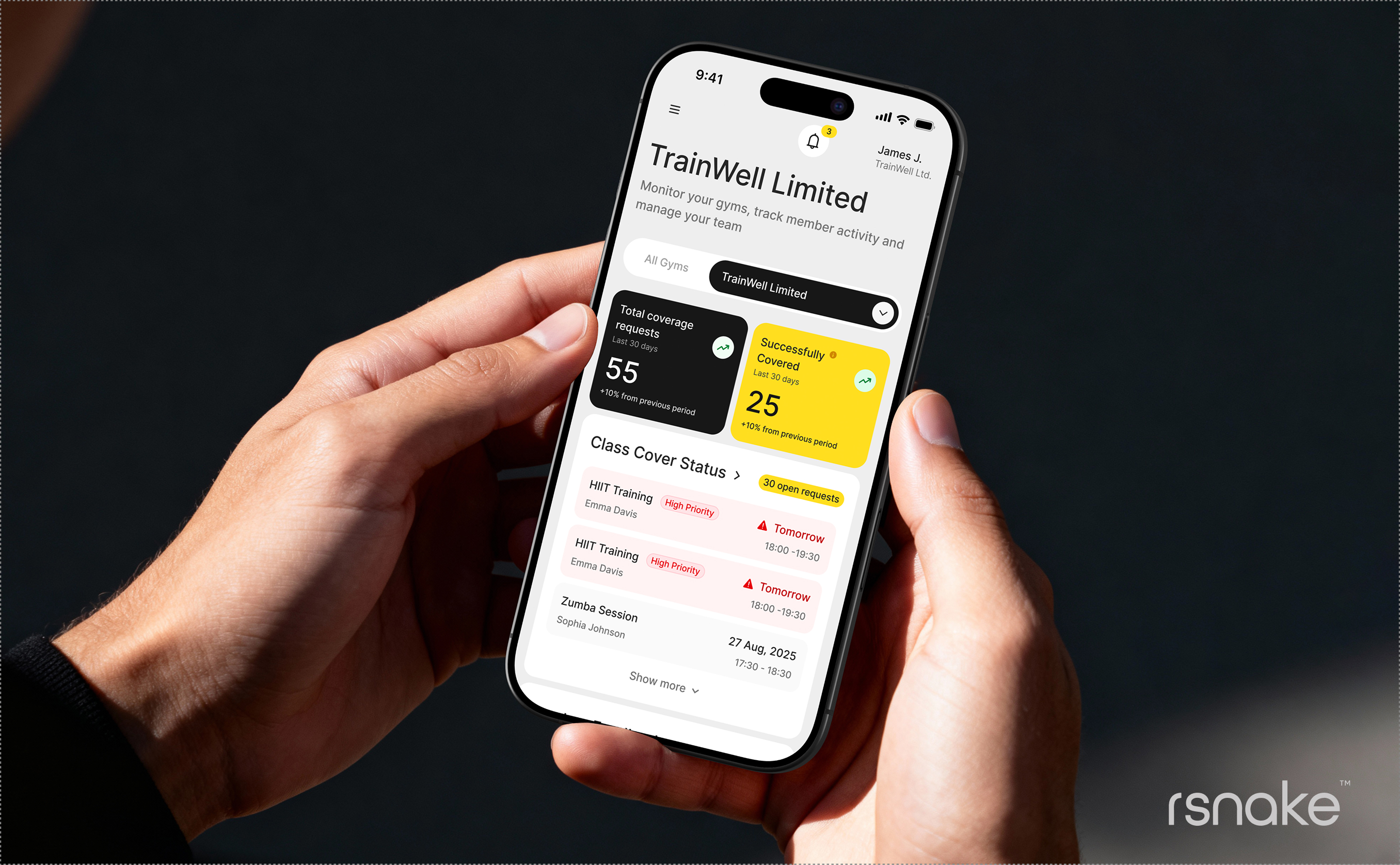
A v1 is the first fully usable release of your product after the MVP. It builds on the validated core by adding the most impactful features and improving performance, stability and user experience. Whereas the MVP might use quick hacks or third‑party services to prove a concept, v1 invests in scalability, maintainability and polish.
Success Metrics
Before writing a single line of code, define what success looks like for each stage. For prototypes, success might mean stakeholder approval or positive feedback from user interviews. For an MVP, track metrics like activation rate (are users completing the core workflow?), retention and willingness‑to‑pay. For v1, monitor adoption growth, churn and customer satisfaction. Clear metrics prevent scope creep and ensure that every build serves a learning objective.
Prototype vs MVP vs v1 at a Glance
Startup Software Development Process
A disciplined process helps you move quickly without cutting corners. At Rattlesnake Group, founders personally guide clients through each stage to ensure cohesion between strategy, design, development and marketing. Here’s a practical roadmap:
Step 1: Kickoff and Scope
- Define goals and constraints. Align on the business vision, customer problem, success metrics and timeline. Document constraints like budget, regulatory requirements or existing technology.
- Clarify what MVP means for you. As highlighted in the notes, “MVP” is interpreted differently by each founder. Decide if you’re validating a concept with a simple prototype or building a monetizable product. Clear scope avoids misaligned expectations and runaway costs.
Step 2: Research and Validation (Before Coding)
- Market and competitor analysis. Study the market size, trends and competitors. Evaluate user pain points and identify gaps that your product can address.
- Persona and user journey mapping. Define your ideal customer profile, motivations and challenges. Map out the end‑to‑end journey to uncover friction points. This ensures that every feature in your MVP serves a real user need.
- Feasibility checks. Validate that the product idea is technically and legally feasible. Conduct small experiments (e.g., landing pages, surveys) to gauge interest before investing in development.
Step 3: Feature Prioritisation
- Prioritise ruthlessly. Use frameworks like MoSCoW (Must‑have, Should‑have, Could‑have, Won’t‑have) or RICE (Reach, Impact, Confidence, Effort) to rank features. Focus on the minimal core loop that delivers value.
- Document exclusions. Explicitly list what the MVP will not include. This prevents scope creep and keeps the team focused on the most important learning objectives.
Step 4: UX Flows and Prototyping
- User flows and wireframes. This is one of the most critical stages of the process, as it defines the user journey, shapes the MVP logic, and deliberately scopes and limits the feature set. Clear user flows align stakeholders, prevent unnecessary features, and ensure the product remains focused on its core value before being translated into wireframes and interactive prototypes.
- Usability testing. Conduct quick sessions with target users to identify friction points. Incorporate feedback before development begins.
Step 5: Architecture and Tech Stack Choice
Before committing to specific tools, there are a few sub-steps to take into account: define the MVP architecture, lock the core data model, map integrations, and decide what must run asynchronously, so the stack supports both speed now and sane growth later.
Choose an MVP-Fit Architecture
At this stage, the priority isn’t a “universal” microservices setup; it’s a clear, extensible foundation. In most cases, a modular monolith is the right compromise: keep domains separated (e.g., NestJS modules by domain), enforce clean responsibility boundaries (clean/layered architecture), and preserve the option to extract services later without rewriting the whole system.
Data Model and Integrations
- Data model. Define the core domain model early, including users, roles, and the product’s key entities, plus relationships and constraints. For most MVPs, a reliable relational database like PostgreSQL is the safest default. Use a query layer/ORM that supports transactions and schema migrations (e.g., Prisma) so the product can evolve without fragile manual fixes.
- Integrations. Identify third-party services (payments, messaging, analytics, file storage) and integrate them through an adapter/provider layer (port–adapter approach). This reduces vendor lock-in and lets you swap providers later without touching business logic.
Avoid Non-Scalable Tools
Rattlesnake cautions against fragile no-code platforms in favour of scalable, widely adopted technologies such as React.js, Node.js, and React Native (for cross-platform mobile apps). AddJam similarly recommends battle-tested frameworks with large communities and deep talent pools, options like Node.js and Ruby on Rails, paired with React/React Native, tend to simplify hiring and reduce long-term risk. Avoid trendy tools that can slow delivery, constrain architecture, or narrow recruitment options.
Use async Processing for Expensive Operations
Remove “heavy” work from the critical request path and handle it asynchronously: emails/notifications, document generation, and synchronisation with external APIs. In the Node.js ecosystem, this is commonly done with job queues (e.g., Bull) and dedicated workers, improving stability today and making scaling easier later.
Build Baseline Security Early
Even for an MVP, establish essential controls:
- Authentication (JWT or sessions)
- Roles and permissions (RBAC)
- Auditing for key actions
- Secure secret management. If personal data is involved, define minimally sufficient data-protection practices from day one to avoid expensive rework.
Observability and Quality From the Start
Launch with a minimal but effective observability setup:
- Structured logging
- Error tracing
- Basic metrics/health checks. At the API level, standardise input validation, error formatting, and documentation (OpenAPI). This reduces maintenance costs and speeds up debugging immediately.
Balance Speed and Future Flexibility
AddJam warns against over-engineering for scale too early; you can run an MVP on simple infrastructure and upgrade later. The better trade-off is simple deployment combined with clean code boundaries: modularity, contract-based integration interfaces, migrations, and tests for critical scenarios.
Testing Strategy for an MVP
The goal isn’t 100% coverage, it’s protection against the most costly failures while keeping iteration fast.
Testing pyramid
- Unit tests: critical business logic (calculations, rules, access checks). Fast, refactor-friendly.
- Integration/E2E tests (small set): signup/login, core product flow, payments/subscriptions, and creation of key entities. Few tests, high value, designed to catch regressions where they hurt most.
Step 6: Hardening
- Quality assurance. Test the product across devices and edge cases. Include functional tests (does it work?), performance tests (is it fast enough?) and security checks.
- Iterative improvements. Fix critical bugs and polish the user experience. Harden APIs and data models to ensure stability before launch.
Step 7: Launch, Measure and Iterate
- Release the MVP. Deploy to production and onboard a limited group of users. Make sure analytics and error tracking are in place.
- Gather feedback and metrics. Measure activation, retention, engagement and revenue metrics. Conduct user interviews to understand what works and what doesn’t.
- Iterate towards v1. Use insights to prioritise features for the next release. Continue refining design and technical architecture. According to ASPER Brothers, most successful MVPs are delivered within 4–10 weeks. However, this timeline only holds if the scope is strictly controlled and the team is experienced.
Choosing a Tech Stack for a Startup (Principles and Examples)
Selecting technologies affects development speed, hiring, cost and scalability. Principles to keep in mind:
- Avoid the shiny object trap. Developers often gravitate toward new frameworks, but AddJam reminds us that battle‑tested technologies are popular because they work at scale. Startups should prioritise reliability and community support over novelty.
- Consider the talent pool and ecosystem. A large community means abundant libraries, tools and developers. Ruby on Rails powers Shopify and GitHub. React and React Native benefit from massive developer communities and corporate backing.
- Optimise for speed to iterate. AddJam emphasises that velocity is more valuable than technical perfection, and popular stacks enable faster shipping.
- Don’t over‑engineer. Build for present needs with an eye to growth, but avoid architecting for millions of users on day one.
- Match the stack to the product type. Web, mobile and cross‑platform apps have different requirements.
Tech Stack Comparison
These are illustrative; a good partner will tailor the stack to your use case, budget and long‑term vision. Rattlesnake prioritises scalable tools and avoids fragile, non‑scalable platforms like Bubble or Adalo.
How Much Does Software Development Cost for Startups and What Drives It?
Software development costs vary widely, from a few thousand dollars for a lean MVP to hundreds of thousands for a feature‑rich platform. According to Scopic’s breakdown, the average cost ranges from about $5,000 for an MVP to around $150,000 for a complex, full‑fledged app. The challenge is that many founders embark on projects without understanding cost drivers, leading to unexpected expenses and delays.
Nine key factors influence cost:
Pricing Models
- Fixed scope (project‑based): A single price is agreed upon after requirements are defined. Works well when the scope is clear, but leaves little room for changes. Avoid agencies that propose a fixed price without a thorough specification; hidden requirements often lead to revisions and delays.
- Time and materials: You pay for hours worked. Gives flexibility to adjust scope but requires trust and transparency. Ideal for MVPs and ongoing evolution, where learning will shape the roadmap.
- Dedicated team/retainer: You hire a cross‑functional team for a period. Best when building a complex product that needs continuous iteration and integration with your internal processes.
Cost Ranges and Scenario Examples
- Lean MVP (single platform, simple features): USD $5,000–$20,000. Utilises minimal custom design and leverages open‑source or managed services.
- Mid‑range SaaS product (web + mobile, custom UI, basic integrations): USD $30,000–$100,000. Requires a cross‑functional team and significant design work.
- Complex, regulated platform (multi‑platform, high security, rich integrations): USD $100,000–$200,000+. May involve compliance audits, custom infrastructure and ongoing development.
Note: These figures are illustrative. Always discuss trade‑offs openly with your development partner and insist on clear explanations of how scope changes affect cost.
In‑House vs Outsourcing: Choosing the Right Build Model
Deciding whether to build software with an internal team or to outsource is crucial. Each model offers different benefits and risks.
In‑House Development
Pros:
- Direct control and collaboration. An internal team allows you to supervise the entire process and make on‑the‑fly decisions. Collaboration is tighter and communication smoother.
- Better alignment with company culture. Your employees live and breathe the brand and have a deeper understanding of long‑term goals.
- Stronger data security and IP control. Sensitive information stays within your organisation.
Cons:
- Higher costs and slower hiring. Recruiting developers, designers and product managers is expensive and time‑consuming.
- Management overhead. Managing a development team diverts attention from your core business and may require micromanagement.
- Limited expertise for specialised tasks. Building capabilities in design, DevOps, and marketing requires significant investment.
Outsourced Development
Pros:
- Cost savings. Outsourcing to regions with lower labour costs offers savings without sacrificing quality.
- Global talent and specialised expertise. You can access a broader pool of specialists and niche skills.
- Faster time to market. External teams can start immediately and aren’t constrained by internal recruitment cycles.
Cons:
- Hidden costs and communication barriers. Offshoring may lead to miscommunication and unexpected expenses.
- Limited domain understanding. Outsourced teams might lack deep knowledge of your industry.
- Reduced supervision and dependency. You rely on a third party to prioritise your project.
Hybrid Model
A hybrid approach combines an in‑house product owner or tech lead with an outsourced development studio. The internal leader ensures alignment with business goals, while the external team provides design and engineering capacity. This model offers control and speed, albeit with some complexity in coordination.
Build Model Comparison
How to Choose a Startup Software Development Company?
Choosing a development partner is a high‑impact decision. A good agency should feel like an extension of your team rather than a vendor. Evaluate candidates on the following criteria:
- Scope fit and portfolio relevance. Look for agencies with experience in your sector and in projects of similar complexity.
- Product thinking and UX capability. Avoid body‑shop teams that “give you engineers who blindly write code.” Seek partners who combine design, development and marketing skills, conduct market research, and prioritise user journeys. Rattlesnake’s approach is product‑led, blending creative strategy with technical execution.
- Communication cadence and transparency. Pay attention to who you speak with during early conversations. Direct access to founders or senior product leaders suggests a boutique studio. Rattlesnake’s founders are personally involved and maintain direct communication throughout the project.
- Documentation, handover and IP ownership. A robust handoff process reduces risks when switching teams. Mad Devs notes that losing access to code or documentation during a project transfer can double costs. Ensure the agency provides full access to repositories, design files (e.g., Figma), usage guidelines and GitHub documentation. Clarify who owns the intellectual property; contracts should include assignment clauses to transfer all rights to you upon payment.
- Post‑launch support and maintenance. Startups evolve quickly; choose a partner who can adapt to changing priorities without locking you into rigid contracts. Rattlesnake offers flexible support packages to help early‑stage founders avoid heavy financial burdens while ensuring the product continues to deliver value.
- Quality assurance and security posture. Ask about testing practices, security audits and compliance experience, especially if you operate in regulated industries.
- Cultural fit and values. Partnership success depends on trust and shared values. A discovery workshop or small pilot project can reveal whether the agency genuinely engages with your mission.
When Rattlesnake Is a Good Fit?
Rattlesnake is a strong fit for founders who see software as a long-term product, not a one-off build. We work best when we’re brought in early, trusted to think alongside you, and expected to take real responsibility for outcomes.
We’re a good fit if:
- You’re looking for a long-term product partner, not just a delivery team.
- You value direct access to founders, senior designers, and product thinkers.
- You want design, UX, development, and marketing to work as one system.
- You’re building a web or mobile product that needs to scale beyond a prototype.
- You want a team that challenges ideas, improves scope, and helps you make better product decisions.
If this reflects how you want to build, a short discovery call is the easiest way to explore next steps and see if the partnership makes sense.
Rattlesnake is a leading product design and development studio based in London. We partner with ambitious companies to build digital products, brands, and growth systems that perform.


Ready to start?
Send us an email with your project details, and our team will connect with you within 24 hours to schedule a call.


© 2020-2026 Rattlesnake Group Limited.
Rattlesnake Group Limited is a limited liability company registered in England and Wales. Registered number: 12551349. Registered address: 124 City Road, London EC1V 2NX. VAT Registration Number: 436362592.


