.svg)
Building TalentCoach: From a Coaching Idea to a Connected Digital Platform

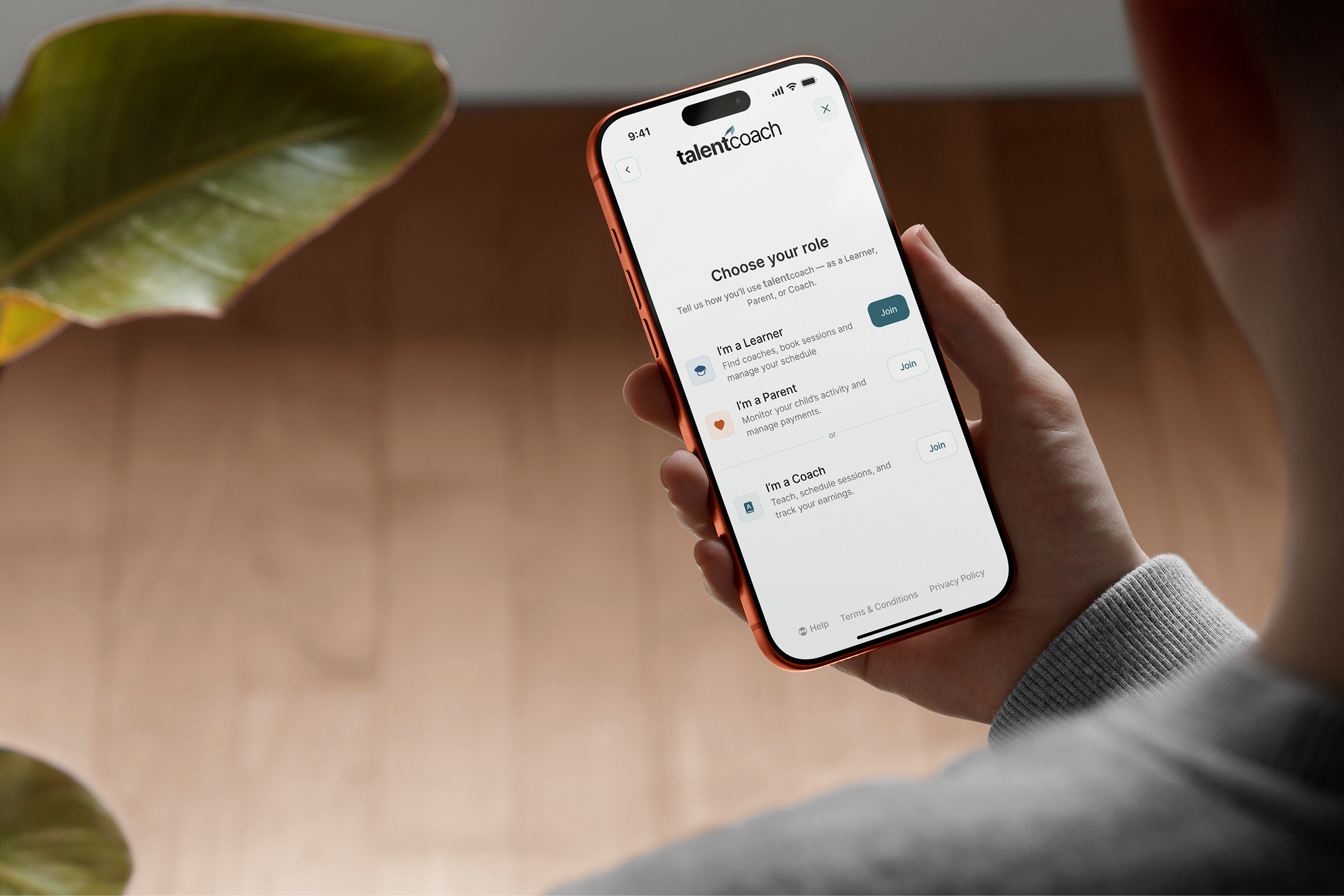
- Finding a trusted coach across sport, music, languages and education often means searching in several places. TalentCoach brings discovery, booking and learning activity together.
- The product serves learners, parents and coaches. Trust checks, useful profiles, in-platform communication and clear session records make each role work.
- Rattlesnake built the brand identity, UX/UI, platform, website and iOS and Android apps as parts of one experience.
Finding a coach sounds like a simple search task. Then the real questions arrive. Is this person qualified? Do they teach children? Can I book a group session? Where will I find the details next week? TalentCoach was built around those questions, not just the search result.
The UK platform connects learners with coaches across sport, music, the arts, languages and academic learning. Rattlesnake worked on its brand identity, website, platform and mobile apps. Each part had to remain useful after the first session.
The idea behind TalentCoach
TalentCoach began with a gap familiar to anyone searching for help with a skill. A recommendation might lead to a social profile. A second search might lead to a tutor’s website. A specialist directory might cover one subject but not the next. The learner then has to compare people, prices and credentials across unrelated pages.
The TalentCoach founder’s story gives this problem a human scale. Paul Stevens writes about a football coach in a park, a maths tutor building confidence and a swimming instructor teaching a life skill. He saw how much work sits around the lesson: finding learners, managing bookings, taking payment and keeping a diary. Parents and learners faced their own problems. They needed to know whom they could trust.
TalentCoach brought those needs into one coaching marketplace. Its public site now lists subjects from GCSE maths to acting, guitar, football and swimming. Learners can explore coaches across the available disciplines. Coaches can create profiles, set availability and offer sessions through the same service.
The idea reaches beyond a transaction. A useful learning relationship needs messages, session information and a sense of progress. A product limited to “find and pay” would leave that work elsewhere.
One platform, several different users
A learner wants to know who can help. A parent wants to understand the person teaching their child and what happened in each session. A coach needs a workable schedule, clear payments and a record of their learners. An administrator needs oversight of the wider service. These are related needs, but they are not the same screen.
That made TalentCoach a UX/UI design task as much as a marketplace development task. The learner path begins with a discipline and a profile. The coach path begins with expertise and terms. The parent role adds visibility around a child’s learning.
Rattlesnake designed the platform around these distinct roles and developed the product behind them. The public learner experience shows filters for subject, level, location and price. The coach experience describes profile creation, verification, rates and session management. The supplied product material shows dashboards and session views for work that continues after booking.
The design question was how to let each person complete a task without carrying the complexity of the whole marketplace.
Trust had to become part of the product
Trust cannot rest on a headline saying “trusted coaches”. Learners need evidence they can inspect.
TalentCoach profiles surface:
- qualifications;
- experience;
- session options;
- reviews.
Public coach cards show an ID Verified marker. The project brief describes DBS Verified markers where applicable.
TalentCoach says every coach is reviewed before joining. Coaches working with under-18s must have an Enhanced DBS check verified by TalentCoach, according to its learner safety guidance. That requirement is specific to work with children.
The wider design makes those checks useful. A parent should see them during comparison, before paying. TalentCoach supports messaging before a booking, so a learner can ask about:
- teaching style;
- access needs;
- other questions before committing to a session.
The same principle applies after a session is arranged. Booking details, confirmations and reminders give both sides a shared record.
The supplied product presentation shows session-management views with:
- upcoming sessions;
- group sessions;
- past sessions;
- attendance;
- learners;
- meeting links.
A coach can see what needs attention without reconstructing the week from separate chats and calendars.
That record gives people a clearer account of what they arranged.
Turning a name into a brand
TalentCoach came to Rattlesnake with a name and an ambition. The identity needed to work for a child starting a new activity, a parent making a careful choice and a coach running a professional practice. Too formal, and it would feel distant. Too playful, and the trust signals would lose weight.
The brand guidelines describe this balance through two archetypes. The Ruler brings order, clarity and reliability, while the Everyman brings warmth, openness and an everyday voice.
Together, they give TalentCoach room to sound confident without sounding grand. The brand can feel structured and trustworthy while remaining approachable to learners, parents and coaches.
The core line, “Got talent? Coach it.”, captures that balance in just a few words. It keeps the invitation short, active and accessible.
Rattlesnake translated that position into a visual system designed to feel credible, energetic and consistent across the product.
The system was designed to work from a website heading through to an app icon, keeping the identity recognisable across formats.
The guidelines go further than colour and type. They call for photography with a local, everyday UK feel, showing coaches and learners working together in real homes, studios or training spaces. The graphic language can also draw from actual interface elements. A session card, calendar fragment or progress block can become part of a campaign image, keeping the brand visually connected to the product people will actually use.
The identity therefore sets the tone for the website, platform, apps and communications. It was more than a logo placed on finished software. See our startup branding work for this part of Rattlesnake’s practice.
From finding a coach to seeing progress
The product presentation sets out a sequence: find your coach, book a session, track your progress. Each step has to connect to the next.
Find your coach
Search begins with a discipline, but a useful profile goes further. Learners need to see what a coach teaches, where they work, whom they teach and what each session costs. Experience, languages, reviews and verification markers help them decide whether to enquire. The public coach listings show subjects, locations, prices and ID verification on the same cards.
The parent looking for 11+ support and the adult returning to ballet will weigh different details. Both searches need to work.
Book a session
TalentCoach supports one-to-one and group sessions, online or in person, depending on the coach’s offer. Coaches can set their own rates and availability. Some offer packages or continuing sessions. Learners can message a coach before committing. The booking and payment then stay within TalentCoach, which says it uses Stripe for secure payments and records.
Online teaching needs a meeting link, but it does not need a new video platform. TalentCoach’s current FAQ says a coach can manually create a Google Calendar event with a Google Meet link after a learner books. That is a precise step, not an automatic event at the instant of purchase.
Track your progress
The supplied product presentation describes session notes, goals, milestones and coach feedback. The brief describes learner notes for homework or points to remember. Progress becomes something a person can revisit between lessons.
The public site confirms that accounts hold upcoming session details and support rebooking. The exact release status and visibility of every progress tool should be checked with the TalentCoach team before this article goes live.
A reason to keep the coaching relationship in one place
A marketplace can make a first introduction and then disappear from the relationship. TalentCoach was designed to do more. The supplied product material shows an internal chat, recent conversations, notes, feedback and session views. The brief describes notifications in the platform and by email.
Learners have fewer places to search for a message, booking or task. Coaches can review sessions, attendance, learners and meeting information together. TalentCoach holds more than a booking receipt.
The coach dashboard in the supplied presentation brings together completed sessions, payout history, referral income and monthly activity. The figures shown in that design are sample interface content, not verified business results. The point of the screen is the grouping: a coach can see teaching work and income without opening several services.
TalentCoach’s coach page confirms that coaches set their rates and availability. It says payment follows a completed session through Stripe. The same page lists a current commission of 15% plus VAT on completed sessions, with no upfront joining fee. That gives a coach a clear starting point for deciding whether the platform fits their practice.
Referrals add another reason to participate. TalentCoach’s referral programme offers learner credits for future sessions and financial rewards for coaches. Rewards are tied to completed bookings. The design logic is plain: a useful introduction can benefit the person who made it, without changing what the coach earns for a session.
Making activity visible to parents and learners
A parent needs to know what was scheduled, what took place and what comes next. The brief describes a parent account linked to a child, showing relevant activity, missed or cancelled sessions and progress.
That role changes the design questions. Which account holds the booking? Who receives a reminder? How does a missed session appear? The answers need to form one account of the child’s learning.
The exact permissions for notes, messages and feedback are not documented in the public sources. The article should not imply that every item is visible to every parent. What matters here is the product intent: give families a clearer view of coaching activity than a trail of private messages can provide.
Access should mean more than easier booking
TalentCoach Access expresses a wider ambition. Some learners face a cost barrier, even after they find a coach who fits. The TC Access programme lets people apply for support towards coaching sessions. TalentCoach reviews each application individually and provides credits to approved learners when funds are available.
The funding pool includes donated referral credits, a portion of TalentCoach profits and contributions from not-for-profit partners. The programme is selective. TalentCoach does not promise support to every applicant. Its public guidance says detailed financial documents are not required to apply.
The design keeps the experience discreet. TalentCoach says coaches are not told how a session is funded. For them, the booking works like any other. For a learner or parent, the credits can make a session possible that would otherwise remain out of reach.
Helping someone find a coach is useful. Helping more people take part speaks to why TalentCoach was created.
One experience across brand, website, platform and apps
Rattlesnake’s work ran across the whole TalentCoach ecosystem. We developed the brand identity, designed the UX/UI, built the platform, designed and developed the public website, and developed iOS and Android apps. The TalentCoach website credits Rattlesnake Group for its design.
Each surface has a different job:
The website is only one part of that experience. Booking is not the final interaction. A learner checks a goal. A coach reviews attendance or a payout. A parent checks session history. These recurring tasks explain the need for more than a public website.
Rattlesnake’s web application development work covers the difference between a site that explains a service and software that runs it. Our guide to web and mobile app decisions explores how those surfaces serve different moments. TalentCoach called for both.
What building TalentCoach made clear
The project brought several product lessons into focus:
- Trust needs evidence at the point of choice. Credentials, reviews and relevant verification markers belong where a learner compares coaches.
- Every participant needs a reason to return. Learners need continuity. Coaches need tools for sessions and income. Parents need an account of activity.
- Progress needs a place to live. Notes, goals and feedback give people something to revisit between lessons.
- A brand for young learners need not look childish. TalentCoach’s Deep Teal, Lemon, restrained Orange and everyday photography balance energy with confidence.
- The website and product must tell the same story. A visitor who understands the offer should recognise it after signing in or opening an app.
The supplied materials do not establish conversion or user-growth results.
TalentCoach is live
The TalentCoach website is live. Learners can explore coaches and subjects. Coaches can read how to join and manage their work on the platform. The service brings the steps around coaching into one place, from discovery to booking and the work that follows.
For Rattlesnake, the launch marks the result of building the identity and product together. TalentCoach began with a broad ambition: make coaching easier to find, safer to arrange and more useful over time. The finished experience gives that ambition a form people can use.
Rattlesnake is a leading product design and development studio based in London. We partner with ambitious companies to build digital products, brands, and growth systems that perform.


Ready to start?
Send us an email with your project details, and our team will connect with you within 24 hours to schedule a call.


© 2020-2026 Rattlesnake Group Limited.
Rattlesnake Group Limited is a limited liability company registered in England and Wales. Registered number: 12551349. Registered address: 124 City Road, London EC1V 2NX. VAT Registration Number: 436362592.


